Encoding and reconstruction are different tasks
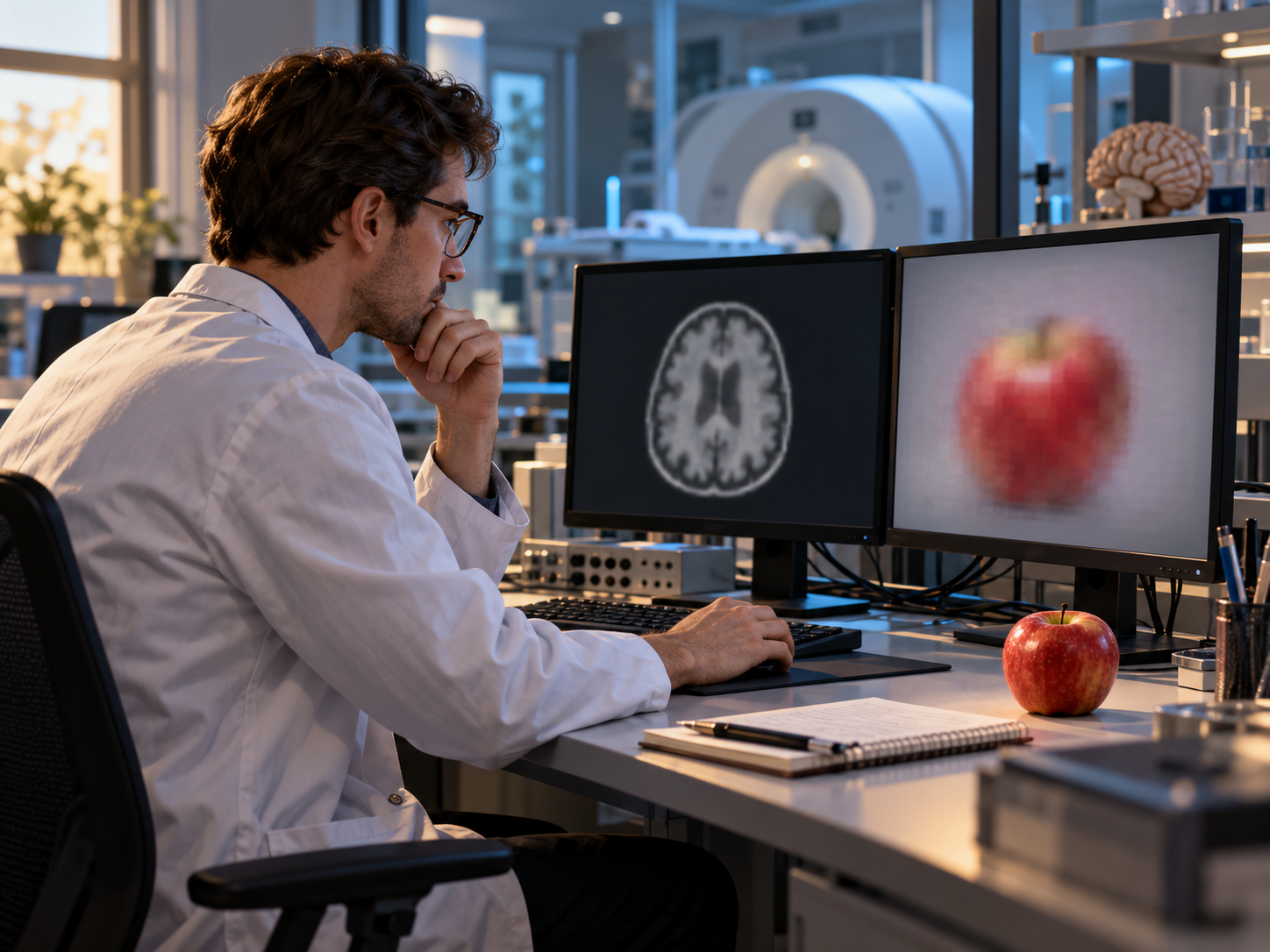
The Weizmann researchers’ public code repository distinguishes two systems. The Universal Brain Encoder predicts fMRI responses from images; Brain-IT reconstructs images from fMRI activity. That direction matters: predicting a brain response to a supplied picture is not itself the same result as recovering a picture from measured brain signals.
Why learn across brains?
The Universal Brain Encoder project describes training across participants, datasets and scanners rather than building an entirely separate model for each person. It learns representations for individual brain voxels and relates them to image features. The researchers report improved transfer to new participants with limited training examples.
Research does not yet establish a therapy
The institute’s September account presents image reconstruction as a research result and describes dream decoding as a future challenge. An fMRI scan takes about two seconds, while video imagery changes much faster. The work should not be presented as a demonstrated communication treatment for locked-in patients or as reliable recording of dreams.
Limits of the evidence
This summary uses the researchers’ public materials. The original heise article was accessible only as a preview. We have not reproduced the experiments or assessed clinical effectiveness.